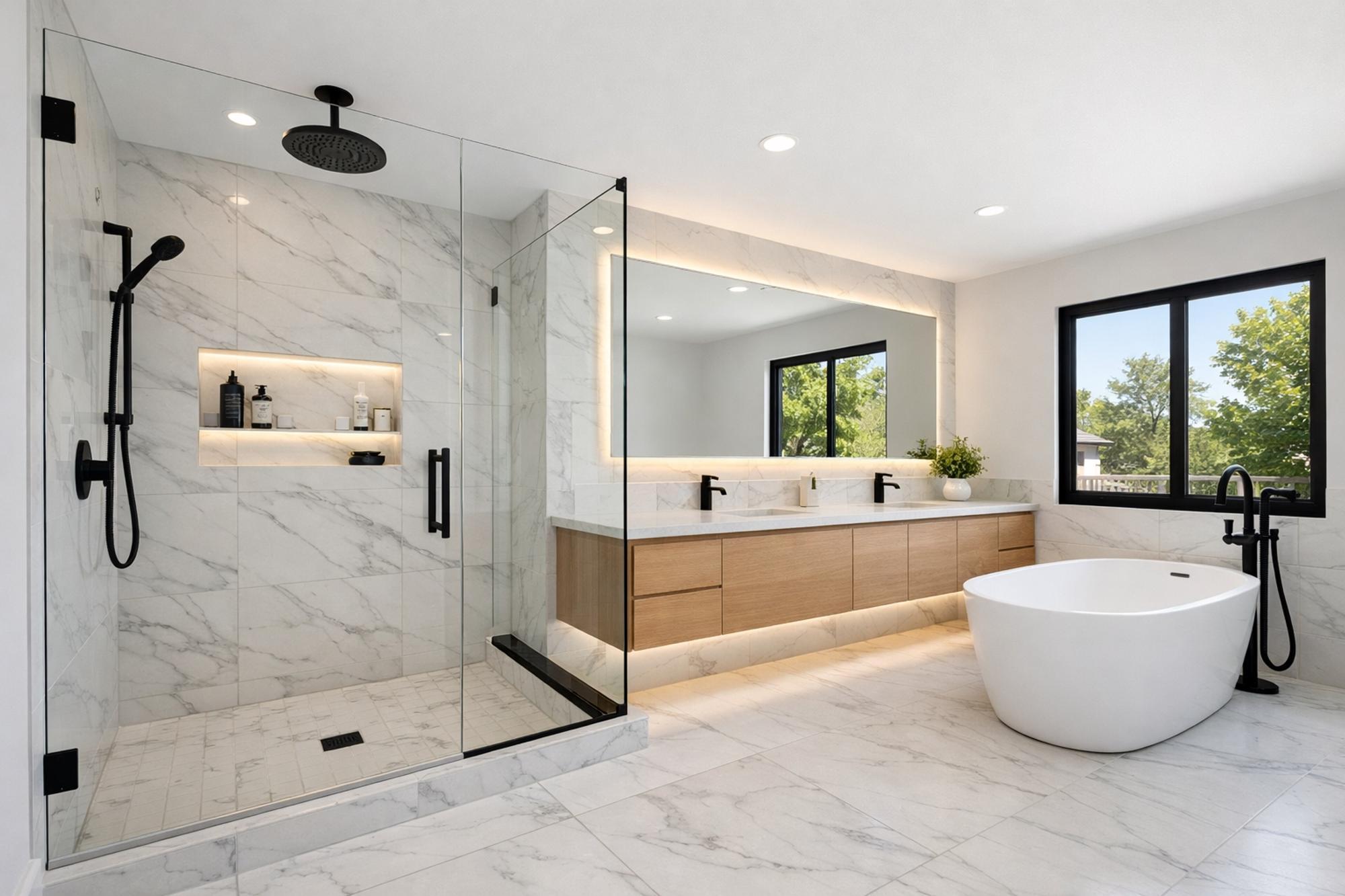
One of the first questions homeowners ask before starting a bathroom renovation is simple: How much will it cost?
The answer depends on much more than the size of the bathroom. The condition of the existing space, the amount of demolition, tile and fixture selections, plumbing and electrical work, layout changes, and the level of finish can all have a significant impact on the final price.
Current 2026 cost guides show a wide range for bathroom remodeling. Professional bathroom remodeling projects can range from smaller updates to much more extensive renovations, while custom bathrooms with significant plumbing, electrical, tile, and layout changes can cost substantially more.
That wide range is why a bathroom should be priced based on the actual scope of work, rather than using a simple price-per-square-foot number.
1. What Should You Budget for a Bathroom Remodel?
Bathroom remodeling projects can vary significantly in scope. A small cosmetic update is very different from a complete renovation involving demolition, plumbing, electrical work, new tile, and new fixtures.
Cosmetic Bathroom Update
A cosmetic update focuses mainly on appearance while keeping most of the existing layout and infrastructure.
It may include:
- Painting
- New mirror
- New lighting
- New vanity
- New faucet
- New toilet
- New hardware
- New flooring
- Minor finish updates
Because there is less demolition and fewer structural or plumbing changes, these projects can be considerably less expensive than a complete renovation.
Full Bathroom Remodel
A full remodel involves substantially more work.
Depending on the project, this may include:
- Demolition
- New floor and wall tile
- Shower or bathtub renovation
- New vanity and fixtures
- Plumbing modifications
- Electrical updates
- New exhaust fan
- Drywall or cement board
- Waterproofing
- Painting
- Trim and baseboards
- Grout and silicone finishing
A bathroom that requires new tile, plumbing relocation, electrical updates, drywall work, and new fixtures will have a very different budget from a bathroom that only needs a new vanity and fresh paint.
Custom or High-End Bathroom Remodel
Larger primary bathrooms and highly customized renovations can cost substantially more.
Custom features may include:
- Large walk-in showers
- Multiple shower fixtures
- Custom niches
- Premium tile
- Heated floors
- Custom cabinetry
- Specialty lighting
- Frameless glass shower enclosures
- Layout changes
- Relocation of plumbing
The more customized the project becomes, the more important it is to develop a detailed scope of work before construction begins.
2. What Factors Affect Bathroom Remodeling Cost?
Several factors can have a major impact on the final cost of a bathroom remodel. Understanding these factors before construction begins can help homeowners create a more realistic budget.
3. The Existing Condition of the Bathroom
The condition of the existing bathroom is one of the biggest variables.
A bathroom may look relatively simple on the surface but require additional work once the old tile, drywall, flooring, or fixtures are removed.
Potential issues can include:
- Damaged subfloor
- Water damage
- Old plumbing
- Improper previous installations
- Damaged framing
- Electrical issues
- Poor ventilation
This is one reason a contractor should inspect the bathroom before providing a final estimate.
4. Plumbing Changes
Keeping plumbing in approximately the same location can help control costs.
Moving a toilet, shower drain, sink, or water supply lines can require additional labor and may involve opening walls or floors.
For example, relocating a shower drain, toilet, vanity, or water supply lines can significantly change the scope of a project.
If you are considering a layout change, it is important to discuss the plumbing requirements with your contractor before finalizing the design.
5. Tile Selection and Installation
Tile is another major part of the bathroom budget.
The price depends on:
- Tile material
- Tile size
- Pattern
- Installation method
- Number of corners and cuts
- Shower niche
- Floor layout
- Wall coverage
- Decorative trim
- Grout and finishing
Large-format tile can create a clean, modern appearance, but installation may require careful handling, precise cuts, and experienced installation.
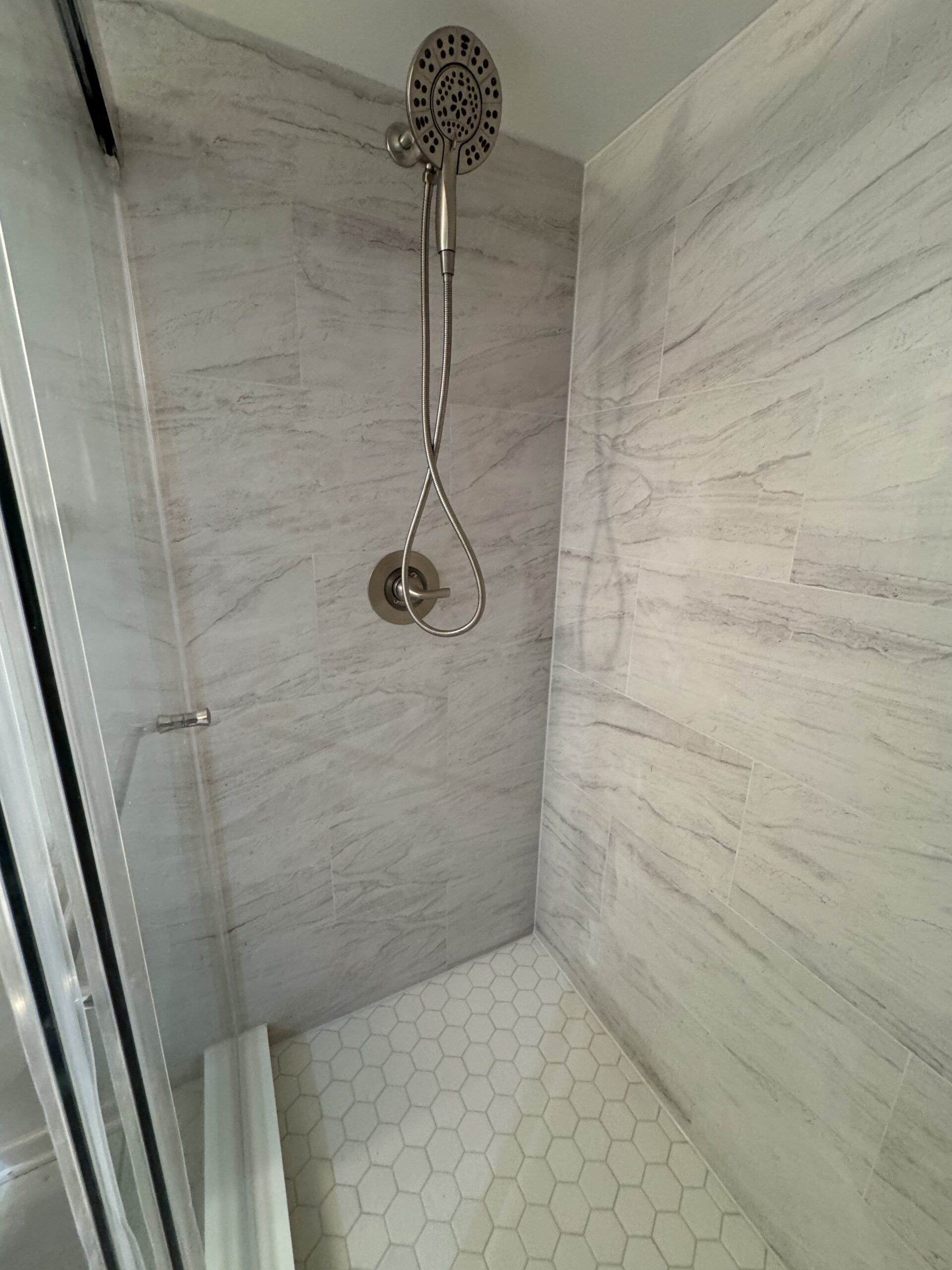
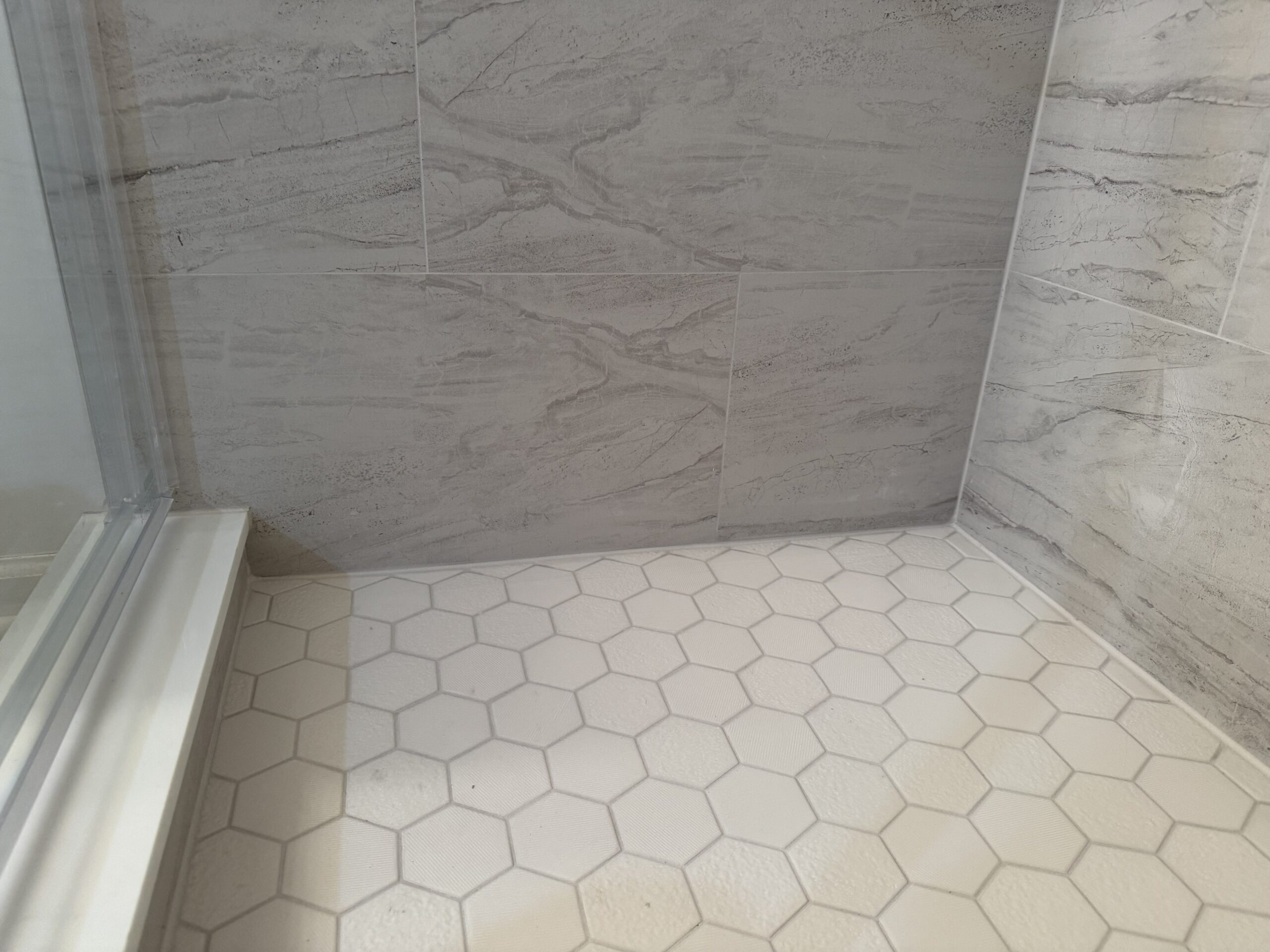
A simple floor with standard tile is very different from a floor-to-ceiling shower with large-format tile, mosaic flooring, decorative trim, and a custom niche.
6. Shower Design
The shower is often one of the most important parts of a bathroom remodel.
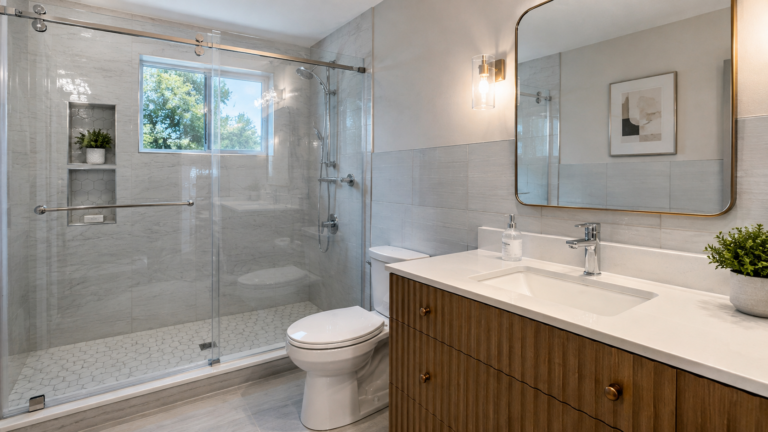
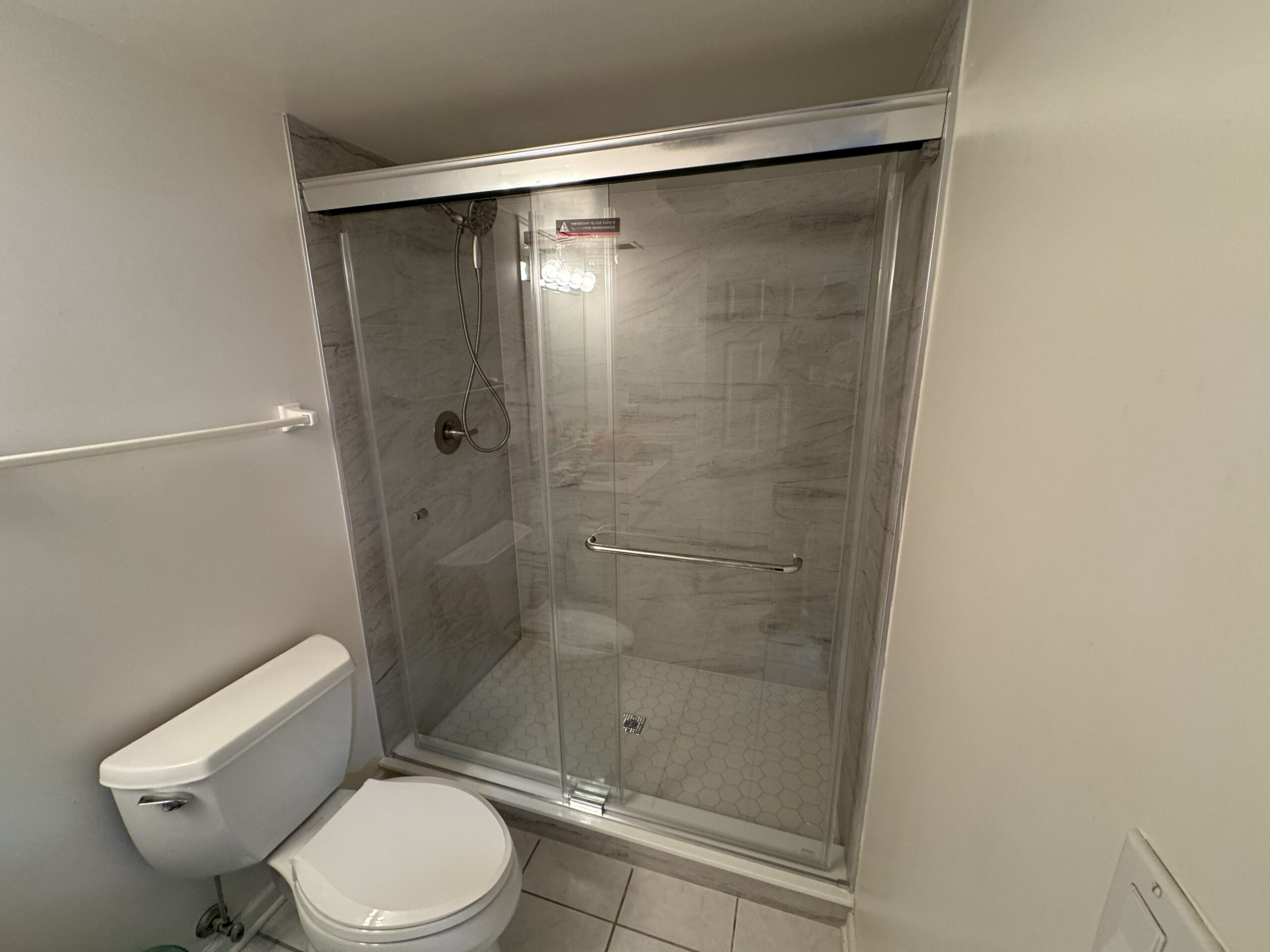
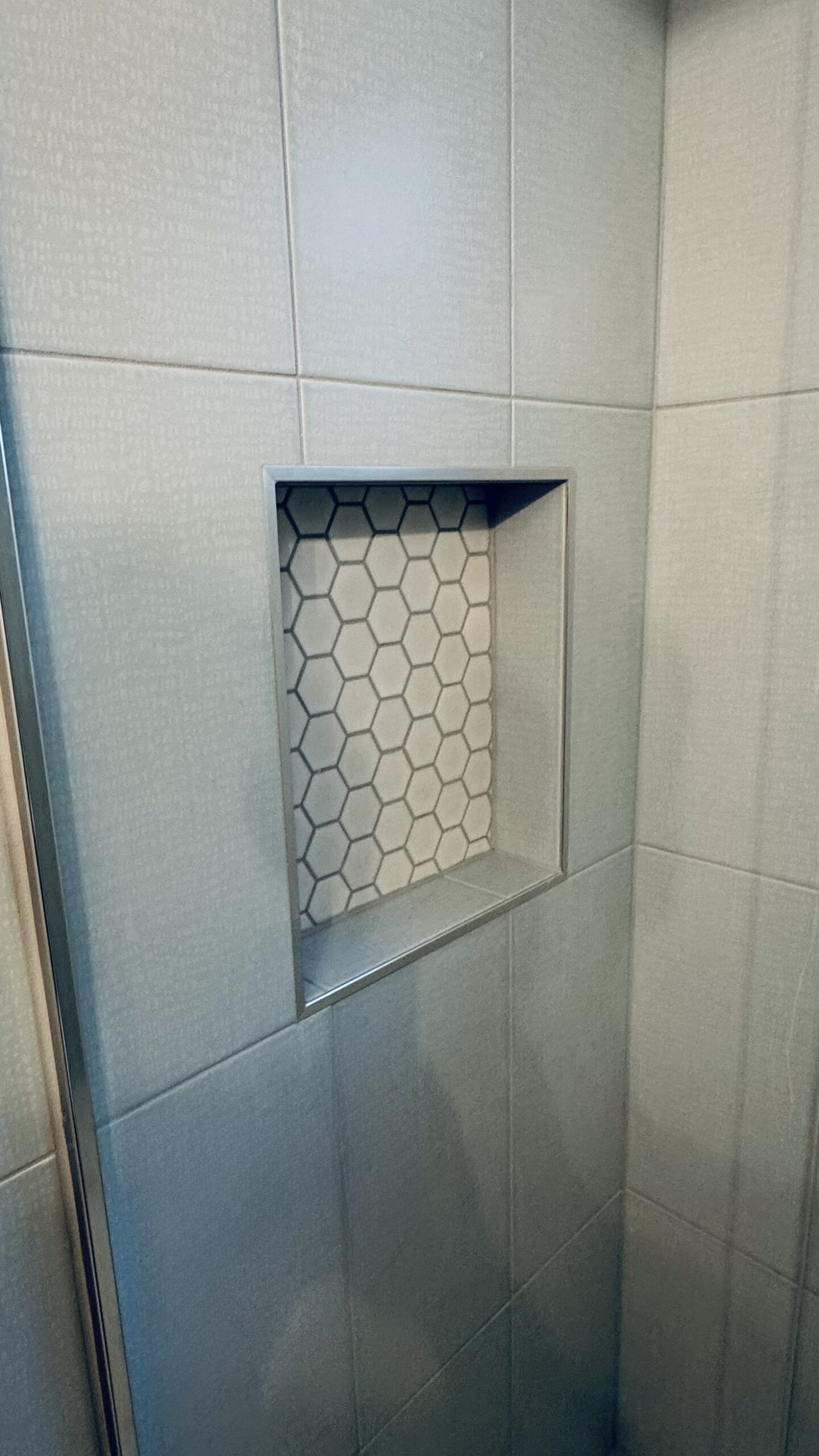
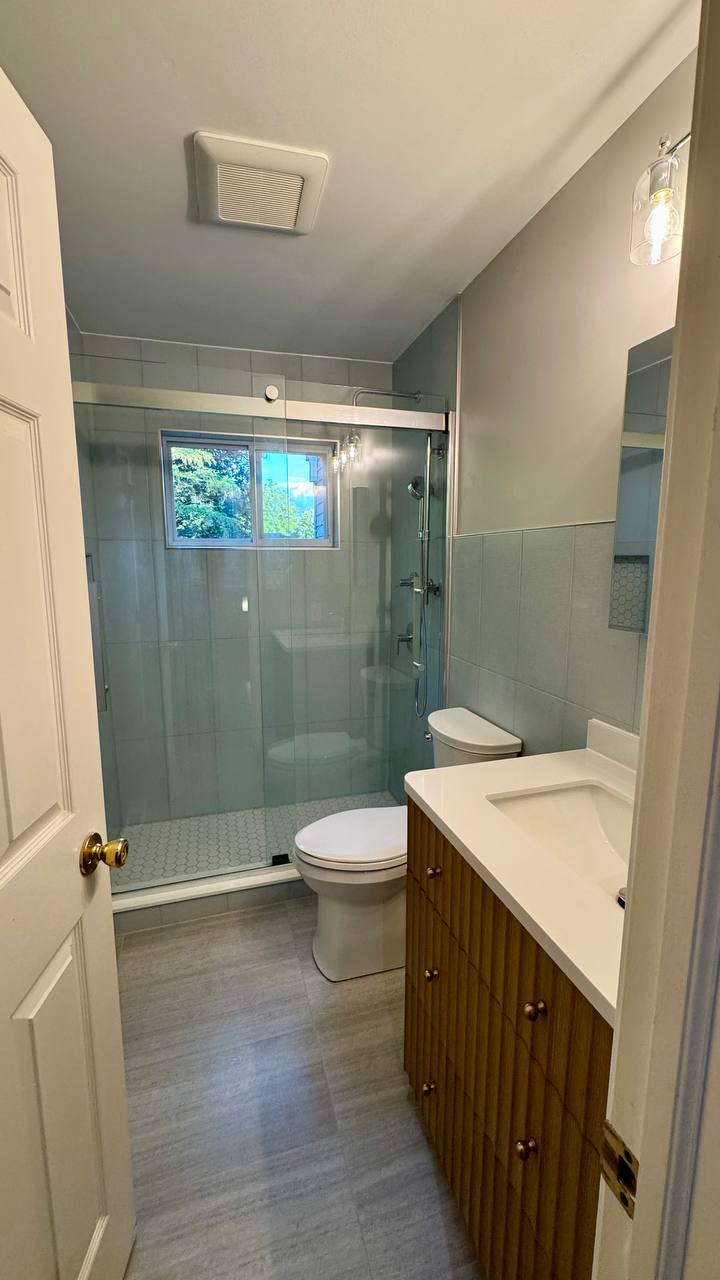
A basic tub and shower combination is very different from a custom walk-in shower with waterproofing, a custom shower base, new drain, large-format wall tile, mosaic flooring, a built-in niche, and a glass enclosure.
The more features and customization a shower requires, the more labor and materials are involved.
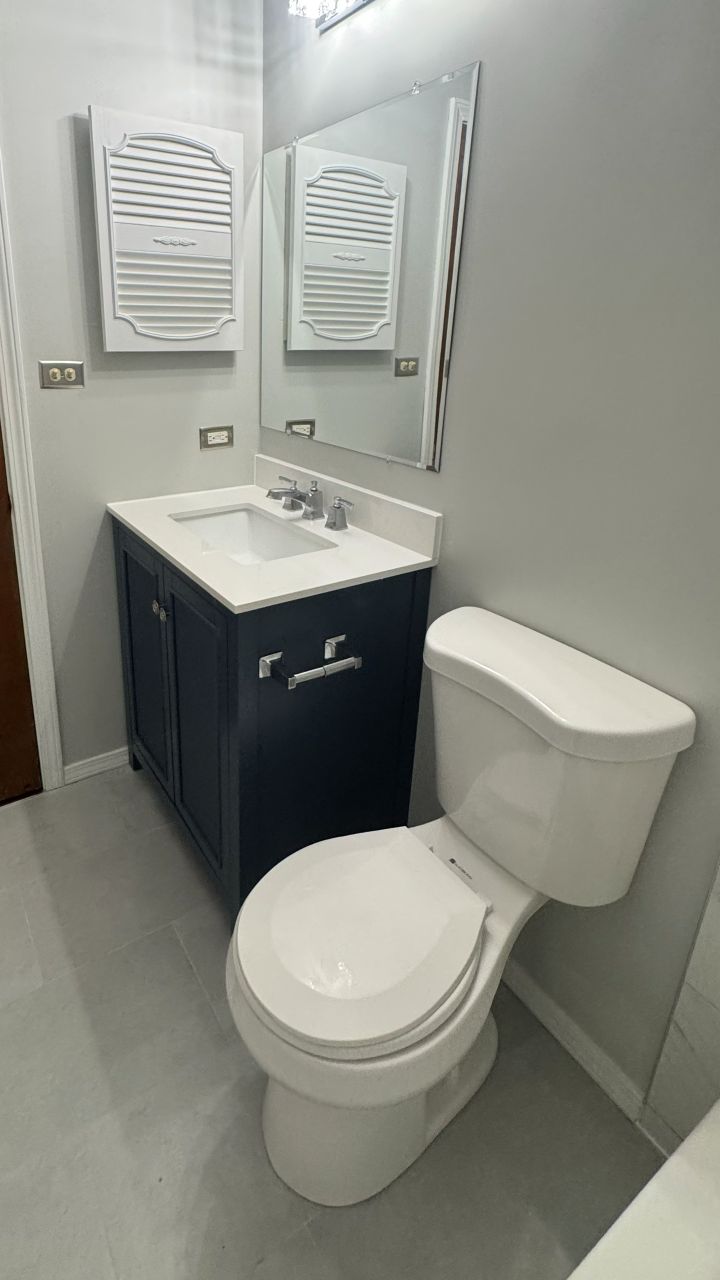
7. Vanity, Countertop and Fixtures
The vanity area can also have a wide price range.
Your choices may include:
- Stock vanity
- Semi-custom vanity
- Custom cabinetry
- Single or double sink
- Quartz countertop
- Stone countertop
- Standard faucet
- Premium faucet
- Standard mirror
- LED mirror
- Additional storage
Homeowners can control part of the budget by choosing different levels of cabinetry, countertops, fixtures, and accessories.
8. Electrical and Lighting
Older bathrooms often need electrical updates during remodeling.
The project may include:
- New vanity lighting
- Recessed lighting
- New switches
- GFCI outlets
- Exhaust fan
- Wiring modifications
Adding electrical work after the walls have already been finished can be more expensive and disruptive. Planning electrical work before drywall and tile installation is much more efficient.
9. Ventilation
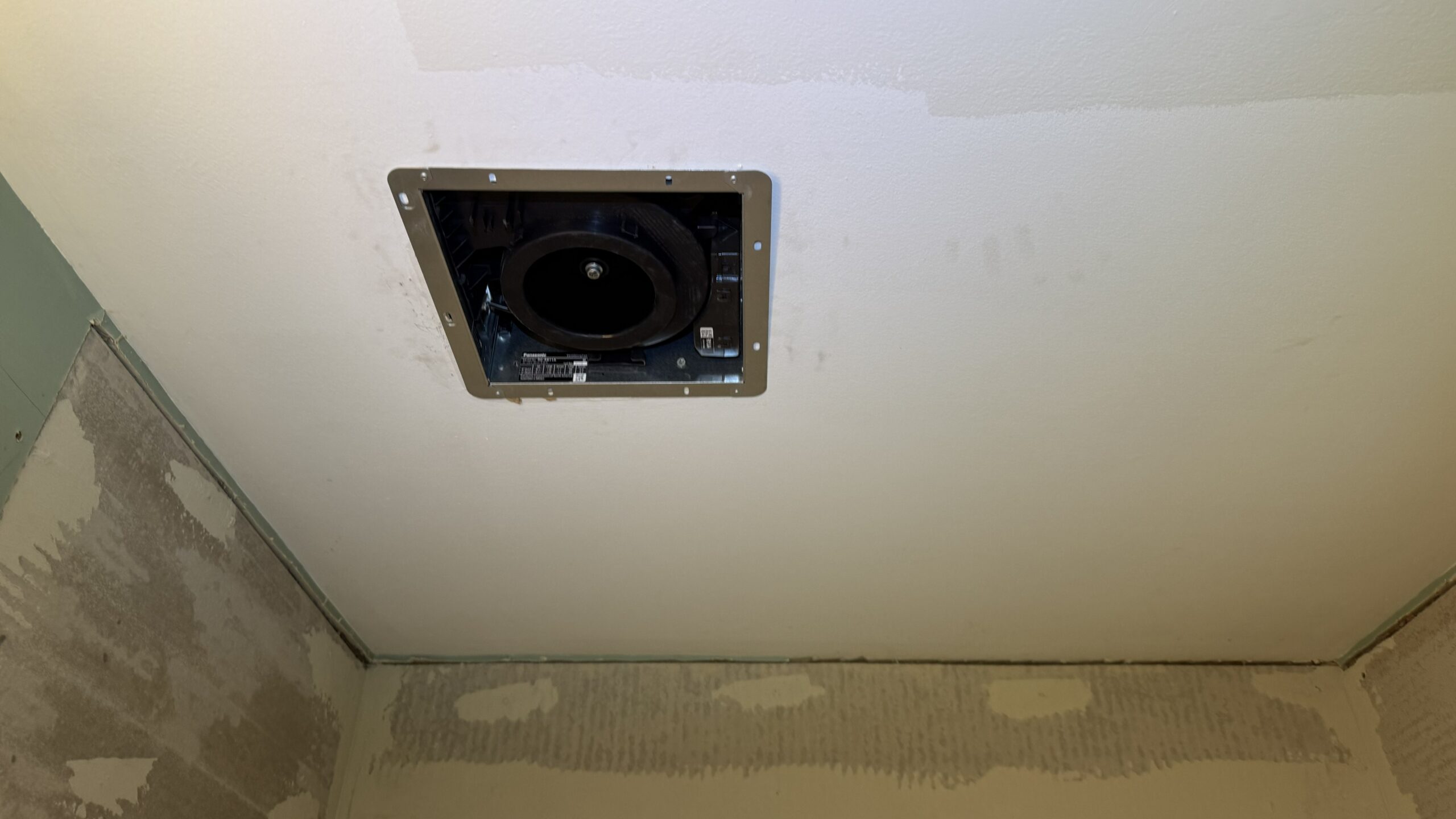
A good exhaust fan is an important part of a bathroom renovation.
Proper ventilation helps control moisture and condensation and can help protect the finished space over time.
Depending on the existing bathroom, the project may require:
- New exhaust fan
- New duct connection
- New switch
- Ceiling modifications
- Electrical work
Ventilation is easy to overlook when creating a budget, but it should be considered as part of the complete renovation.
10. Demolition and Disposal
Before new materials can be installed, the existing bathroom often has to be removed.
Demolition may include:
- Removing old tile
- Removing drywall
- Removing flooring
- Removing cabinets
- Removing fixtures
- Removing a bathtub or shower
- Removing damaged materials
- Hauling debris away
The amount of demolition and disposal required can have a noticeable impact on the project cost.
11. Permits and Inspections
Depending on the scope of the work and the municipality, permits and inspections may be required.
Requirements can vary between communities in the Chicago suburbs.
A project involving plumbing relocation, electrical work, structural changes, or other significant alterations may have different requirements from a simple cosmetic update.
Before starting work, homeowners should determine:
- Whether a permit is required
- Which trades require permits
- Which inspections are required
- Who will coordinate the inspections
- Whether the contractor or homeowner is responsible for the permit
The exact requirements should be confirmed with the local municipality before construction begins.
12. Materials and Fixtures
The materials you select can have a major impact on the final price.
Two bathrooms with exactly the same layout can have very different budgets because of the materials selected.
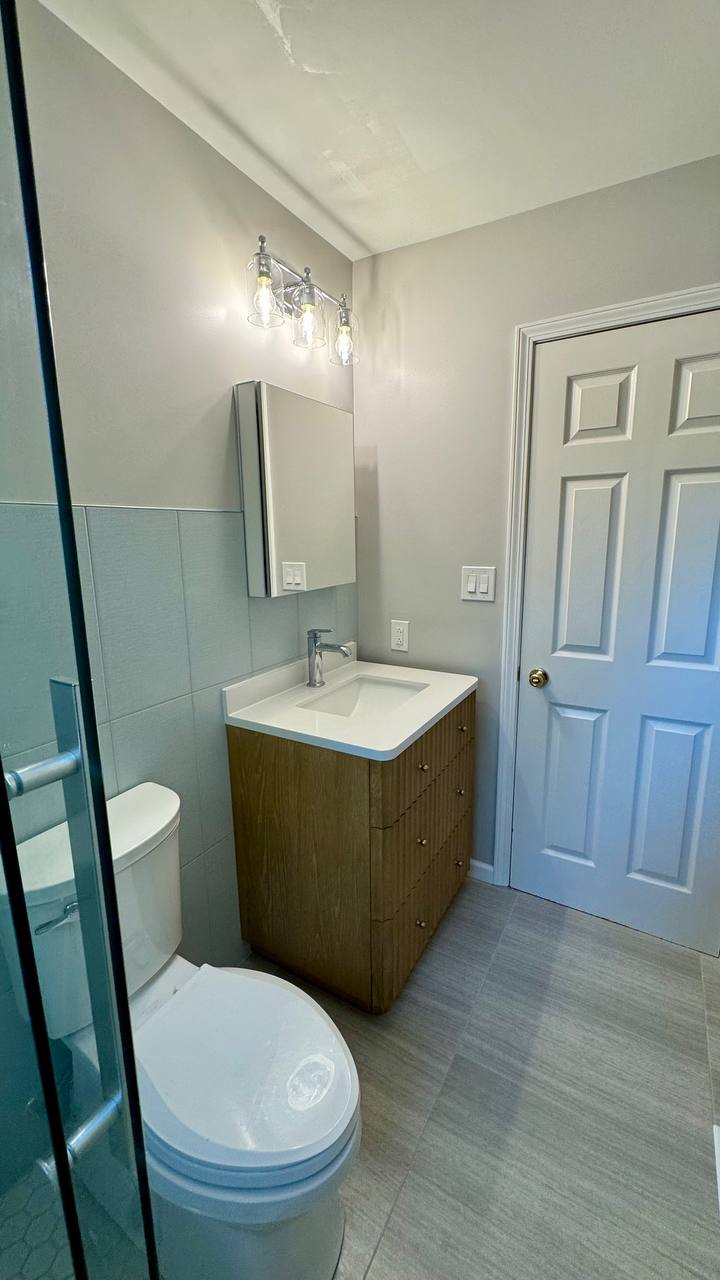
Lower-cost choices may include standard ceramic tile, a stock vanity, a standard faucet, a basic mirror, and standard lighting.
Higher-cost choices may include large-format porcelain tile, natural stone, custom cabinetry, premium plumbing fixtures, LED mirrors, custom glass shower enclosures, and heated flooring.
This is why it is important to choose materials before finalizing the budget whenever possible.
13. Labor vs. Materials: What Are You Actually Paying For?
A bathroom remodel is not simply the cost of tile, a vanity, and fixtures.
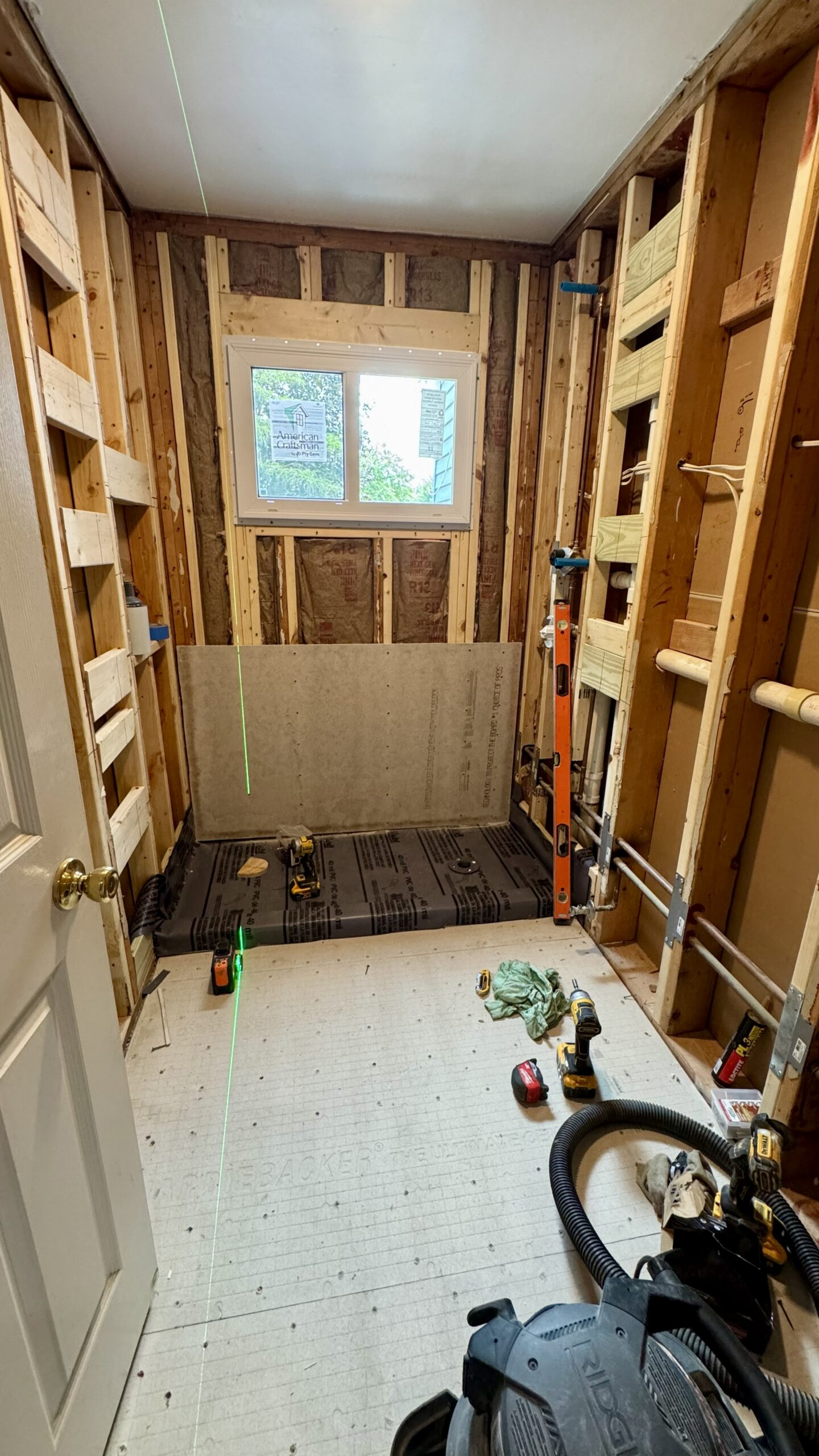
A complete renovation may involve several different trades and construction activities:
- Demolition
- Carpentry
- Plumbing
- Electrical
- Drywall
- Cement board
- Waterproofing
- Tile installation
- Painting
- Finish carpentry
- Fixture installation
- Cleanup
- Project coordination
Labor can represent a significant portion of the total remodeling budget. The amount depends on the complexity of the project, the number of trades involved, the condition of the existing bathroom, and the level of finish.
This is why two estimates with similar material selections can still have very different total prices.
When comparing estimates, make sure you understand exactly what labor and materials are included.
14. How to Keep Your Bathroom Remodel Within Budget
There are several ways to control costs without sacrificing the quality of the finished bathroom.
Keep the Layout if It Works
Moving plumbing can add labor and increase the complexity of the project.
If the existing layout works well, keeping the toilet, vanity, and shower in approximately the same locations may help control costs.
Choose Materials Before Construction
Try to select tile, vanity, fixtures, lighting, and other major materials before construction begins.
This makes the estimate more accurate and reduces last-minute changes.
Prioritize What Matters Most
You do not have to choose premium materials for every part of the bathroom.
You may decide to invest more in the shower tile, glass doors, vanity, or lighting while choosing more moderately priced materials elsewhere.
Plan for Unexpected Conditions
It is wise to leave some room in the budget for conditions that cannot be seen before demolition.
Water damage, subfloor problems, old plumbing, and other concealed conditions can sometimes be discovered only after the existing materials are removed.
15. Why Two Bathroom Remodel Estimates Can Be Very Different
If you receive several estimates, do not compare only the final number.
Make sure you are comparing the same scope of work.
One contractor’s estimate may include demolition, disposal, plumbing, electrical, cement board, waterproofing, tile installation, painting, trim, and cleanup, while another estimate may leave some of these items out.
A lower initial number does not necessarily mean the total project will cost less.
The most useful comparison is an itemized scope of work that clearly explains what is included and what is excluded.
Before signing a contract, make sure you understand the scope, materials, allowances, exclusions, payment schedule, project timeline, and procedures for unexpected conditions.
16. How to Get a More Accurate Bathroom Remodeling Estimate
Before requesting an estimate, prepare as much information as possible.
It helps to know:
- Approximate bathroom dimensions
- Whether you want to keep the existing layout
- Whether the bathtub or shower will remain
- What type of tile you prefer
- Whether you want a new vanity
- Whether you want new lighting
- Whether plumbing needs to move
- Whether electrical work is needed
- Your preferred project timeline
- Your approximate budget
Photos of the existing bathroom can also help a contractor understand the project before the site visit.
During the estimate, ask the contractor to explain:
- What is included?
- What is not included?
- Are materials included?
- Who purchases fixtures?
- Are permits included?
- Who schedules inspections?
- How long should the project take?
- How are unexpected conditions handled?
- What payment schedule is required?
- What workmanship warranty is provided?
A detailed scope of work helps both the homeowner and contractor understand the project before construction begins.
17. Final Thoughts
There is no single price that applies to every bathroom remodel in the Chicago suburbs.
A small cosmetic update and a complete bathroom renovation are two very different projects. The final cost depends on the existing condition, layout, plumbing and electrical requirements, materials, fixtures, tile, labor, and the level of customization.
The best way to understand your actual budget is to have the bathroom inspected, define the scope of work, select the major materials, and receive an estimate based on the specific project.
A clear scope and realistic budget can help prevent surprises and make the remodeling process easier for everyone involved.
18. Planning a Bathroom Remodel in the Chicago Suburbs?
At Euro Pros Remodeling, we help homeowners plan and complete bathroom remodeling projects from demolition through the final finishes.
Our goal is to create bathrooms that look modern, function well, and are built for everyday use.
Contact Euro Pros Remodeling to discuss your project and request an estimate.